Software Development

Imagine you're asked to automate loan approvals. The policy fits in one paragraph: A loan is approved if credit score is 700 or higher, age is between 21 and 65, and income is at least €10,000. Scores from 650 to 699 go to manual review. With an LLM API at hand, the first design almost writes itself: send the policy and the applicant's data to the model and ask for a verdict. It works in the demo, and it takes an afternoon to build. Then real traffic arrives. Every application becomes a mod…


Private means no route, not just a closed door When a client's security requirements say the database may not be reachable from the internet, the interesting work isn't securing the database, it's reaching it. We were building a serverless application: a Next.js front end rendered on AWS Amplify, with its data in a Postgres database on RDS. The requirement was that the database have no public endpoint at all. Those two facts don't obviously fit together, because the part of our stack that ne…

Three sentences, three bugs The bug report was three sentences long and, as it turned out, described three different bugs. Users on a filterable result list were occasionally seeing the same entry twice as they scrolled. Support had also noticed the total count didn't always match what you could actually scroll through. And once in a while, scrolling simply stopped loading anything, no spinner, no error, no network request, until the page was refreshed. None of it threw. Nothing appeared i…
Why Elastic Beanstalk for a Next.js app Elastic Beanstalk is one of the more pragmatic ways to run a server-rendered Next.js app on AWS. It provisions EC2 instances behind an Application Load Balancer, handles scaling and health checks, and still leaves room to drop in custom nginx config, ALB rules, and CloudWatch monitoring through `.ebextensions` and `.platform`, without having to hand-build all of that from scratch. This isn't the only way to run Next.js on AWS, and it's worth saying th…

Understanding why serverless stopped paying off Serverless is an easy sell at the start of a project. No servers to patch, automatic scaling, and pricing that's billed per request instead of per hour. But as one of our client's Next.js applications grew, that same pricing model quietly turned into its biggest cost driver. Moving the project off serverless cut AWS costs by roughly 63% — with the same traffic and the same codebase. Recognizing when a serverless architecture stops fitting a…

Most people who commission software have no direct way to check what they actually received. You can open the app, click through the screens, and see that it does roughly what it was supposed to do. What you cannot see is how it was put together underneath, whether anyone other than the original team could work on it, or what happens the first time it comes under real load. The people best placed to answer those questions are usually the same people who built it, which becomes awkward the moment…

The sentence that stayed with me I asked a client once why he chose us over an agency twice our size. He told me something I still think about today: "You answered in four hours. The other agency needed four meetings just to answer anything at all." That sentence stuck with me the way a good story sticks with you, the kind you replay in your head weeks later because it captures something true about how the world actually works. The customer service line we all know too well Think ab…
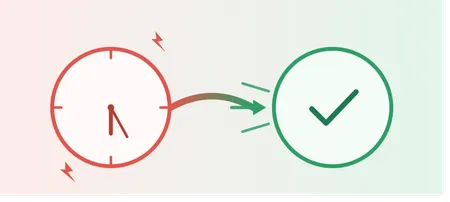
The symptom A content platform, a directory-style site with thousands of dynamically filtered listing pages, was showing serious performance problems in a routine site audit. A full crawl of roughly 6,000 pages, combined with PageSpeed Insights (PSI) API data, turned up two things that looked unrelated at first glance: - Server response times were bad, and occasionally catastrophic. Median time-to-first-byte (TTFB) sat around 0.7 seconds, with over 1,500 pages taking longer than a s…
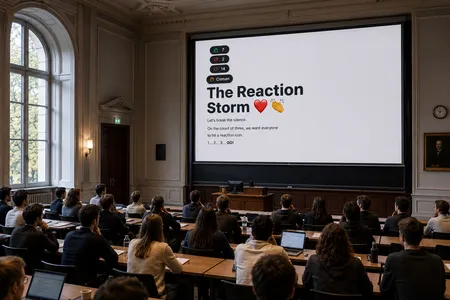
Inside Showslide’s new Faculty Partner Program There is a precise moment that every university lecturer knows by heart, you are mid-slide, mid-thought and mid-sentence when you glance up at the room. Some students are locked in, while many others are somewhere else entirely. Their phones are face-up on their desks, or their laptops are open to a browser tab that has absolutely nothing to do with your course material. This is happening because the traditional, one-way lecture format gives th…